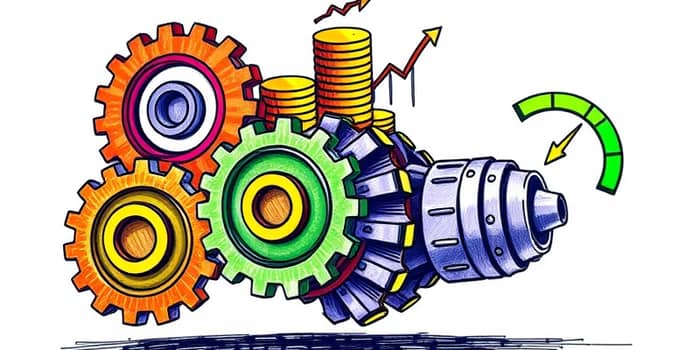
Imagine your finances as a powerful machine, humming with potential and carefully tuned for performance. This self-sustaining financial system metaphor helps you visualize how income, investments, and risk management work together to drive lasting prosperity.
Before you can tune your economic engine, you must know its current state. A complete snapshot reveals where fuel is leaking and where power is idling.
Review all accounts—stocks, bonds, cash—so you avoid siloing assets. Calculate your net worth and establish a baseline cash flow. This holistic view becomes your diagnostic report, guiding every adjustment.
Goals are the destination markers on your financial roadmap. Without them, you risk cruising indefinitely without progress.
Short-term goals might include building a $1,000 starter emergency fund, paying off a credit card, or saving for a vacation. Long-term objectives could be accumulating a down payment for a home, funding college tuition, or achieving retirement readiness.
Make each goal SMART: specific, measurable, achievable, relevant, and time-bound. For example, aim to save $200 per month for six months to reach your emergency buffer. Align targets with your values—what truly matters to you beyond numbers on a statement.
A well-crafted budget channels every dollar toward its most impactful role—whether covering living costs, reducing debt, or bolstering investments.
Households with budgets save on average 30% more. Flex your plan monthly to account for life’s shifts, ensuring it remains both effective and manageable.
Your engine’s horsepower comes from income generation and strategic investing. Boost earnings with side hustles or freelance work, setting aside 30% for taxes and 15% for retirement accounts like 401(k)s, IRAs, or SEPs.
When you invest, focus on low-cost, diversified portfolios. A diversified portfolio balances risk and reward by blending stocks for growth with bond or CD ladders for stability. Rebalance annually, let time in the market overshadow market timing, and harness compounding.
Remember to take advantage of 2026’s increased IRS contribution limits for retirement and HSAs. Even small, consistent deposits can snowball into substantial wealth over decades.
Stability is the machine’s maintenance schedule—preventing breakdowns and ensuring smooth operation. Start with an emergency fund covering three to six months of expenses, building from a $1,000 seed fund.
By keeping this cushion, you guarantee that emergency savings prevent forced asset sales during sudden crises, preserving your long-term investments and peace of mind.
Address high-interest debt aggressively. Prioritize credit cards charging up to 48% interest, and consider refinancing or consolidating loans into lower-rate options. A structured payoff plan accelerates freedom from burdensome interest.
Smart tax strategies act like fine-tuning valves, maximizing engine efficiency. Use Roth conversions in lower-income years, engage in tax-loss harvesting, and optimize asset placement across taxable and tax-advantaged accounts.
For freelancers, separate business and personal finances to simplify deductions and protect your personal assets. Charitable giving and perfecting HSA and 401(k) contributions can unlock additional savings and tax benefits.
Just as a high-performance engine needs regular service, your financial plan demands periodic review. Schedule an annual audit of your portfolio allocations, goals, and insurance coverage.
Partner with a fiduciary advisor if you need tailored guidance. Use digital tools for tracking and projections, ensuring you stay ahead of changes and seize opportunities as they arise.
Adopt no-spend weeks or months on non-essentials, redirecting small daily indulgences into Roth IRAs. Commit to learning new skills that expand your earning power. Celebrate incremental wins—remember, compound small contributions over time creates exponential outcomes.
Finally, cultivate patience and discipline. Achieving financial mastery is a journey, not a race. As you fine-tune your Personal Economic Engine, you’ll discover that consistency over perfection yields lasting results, transforming aspirations into enduring realities.
References