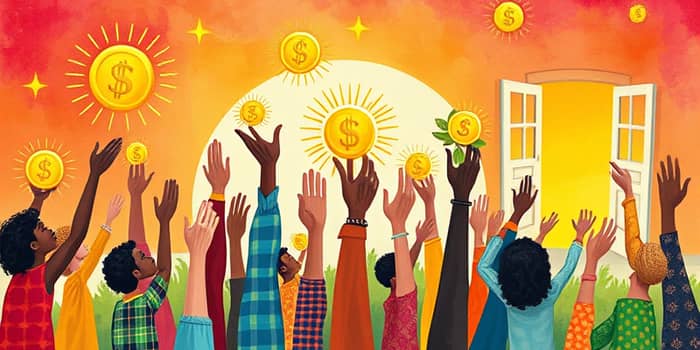
Our relationship with money is shaped by deep beliefs about scarcity and sufficiency. When we believe resources are limited, we feel trapped.
In contrast, an abundance mindset rests on the conviction that opportunities are abundant and endless. This shift can transform stress into creativity, fear into generosity, and doubt into action.
A scarcity mindset frames life as a zero-sum game where one person ™s gain is another ™s loss. It fosters envy, guilt, and paralyzing fear and narrows focus to immediate needs.
By contrast, an abundance mindset views the world as rich with possibilities for growth. It inspires cooperation, gratitude, and a belief that success multiplies as it ™s shared.
This contrast shows why those stuck in scarcity often feel overwhelmed, while abundance thinkers feel energized and ready to explore new horizons.
Modern neuroscience reveals that our brains are malleable. Through neuroplasticity and repeated practice, we can forge new pathways that favor optimism and opportunity.
Studies demonstrate that worrying about lack consumes mental bandwidth, impairing critical thinking and creativity. Conversely, focusing on potential opens cognitive space for innovative ideas and strategic planning.
When you adopt gratitude and possibility-oriented thoughts, you create a self-reinforcing loop. Positive perceptions lead to constructive actions, which generate real opportunities, validating your new mindset.
Shifting from scarcity to abundance is an ongoing journey. Below are proven practices to help you recalibrate your thinking and daily habits.
On an individual level, an abundance mindset fosters resilience, emotional well-being, and a readiness to seize opportunities. People who embrace this perspective recover more quickly from disappointments and remain open to new ventures.
By cultivating optimism fuels positive action, you break cycles of fear and indecision. Financial decisions become aligned with values and long-term visions rather than short-term anxieties.
At the community level, abundance-oriented individuals collaborate, share resources, and build networks that uplift everyone. In such environments, shared growth creates lasting prosperity and collective innovation flourishes.
Many obstacles reinforce scarcity thinking: past financial trauma, cultural messaging that emphasizes lack, and habitual self-talk rooted in limitation. Recognizing these patterns is the first step in break free from limiting beliefs.
Use techniques like mindfulness, reframing exercises, and perspective broadening—reading diverse viewpoints or engaging in community projects—to weaken scarcity loops.
To make abundance a lasting lifestyle, embed small habits into your daily routine. Gratitude moments, generous acts, and curiosity-driven experiments build new neural circuits. Over time, mindset shifts create new realities that align with opportunity and growth.
Embracing an abundance mindset transforms your relationship with money and life itself. By focusing on possibility, collaboration, and gratitude, you unlock pathways to resilience, fulfillment, and shared success.
Start today: choose one strategy, commit to it for a week, and watch how your perspective—and your reality—begins to expand.
References