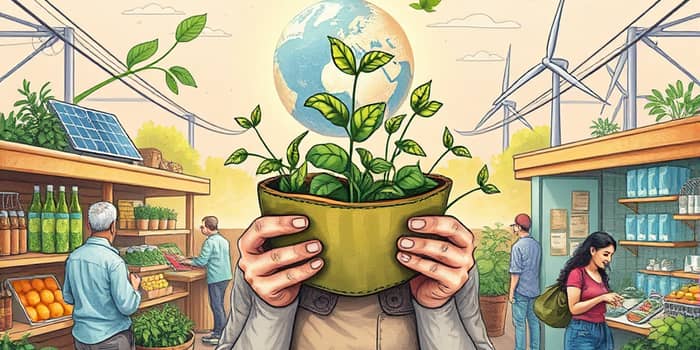
In a world grappling with climate change and social inequality, individual choices carry unprecedented weight. More than ever, consumers are realizing that every dollar spent can either support destructive practices or fuel positive transformation. Sustainable spending invites us to align personal finances with values, crafting daily habits and investment decisions that reflect our commitment to the planet and its people. As 2026 brings fresh economic pressures, integrating environmental protection, social equity, and long-term resilience into your budget is not only ethically sound but pragmatically resilient. This article will guide you through the trends, challenges, and practical strategies needed to make meaningful changes in your financial life.
Traditional consumption patterns have historically prioritized convenience and cost over ethical considerations. This approach has contributed to resource depletion, biodiversity loss, and widening social disparities around the world. By pivoting toward sustainability, individuals become powerful agents of change, channeling market demand toward industries that prioritize responsible stewardship. Embracing this shift helps drive corporate accountability, accelerates innovation in clean technologies, and fosters community well-being.
At its core, sustainable spending is about more than individual gratification; it is an expression of collective responsibility. When consumers demand transparency, waste reduction, and ethical labor practices, businesses respond by rethinking their supply chains. This ripple effect can reshape entire markets, creating a virtuous cycle where profitability and purpose reinforce one another. Ultimately, your daily purchases and investments can align to create a more equitable, resilient, and environmentally safe future for everyone.
Recent surveys reveal a growing willingness among consumers to prioritize sustainability, even in the face of rising living costs. While environmental awareness has never been higher, accessibility and affordability remain critical barriers that must be addressed to maintain momentum.
The world of finance is adapting rapidly to channel capital toward green projects and social programs. In 2026, global sustainable bond issuance is projected to reach $900 billion, signaling steady demand for debt instruments that fund positive change. This total includes $530 billion in green bonds, $115 billion in social bonds, and $190 billion in sustainability bonds, alongside transition and sustainability-linked instruments.
Meanwhile, energy transition investment continues its upward trajectory. The United States deployed $378 billion toward clean energy in 2025, representing 1.2% of GDP, while global figures soared past $2.3 trillion, driven largely by China’s $800 billion commitment. Yet, funding gaps persist, with developing nations requiring hundreds of billions annually to adapt and mitigate climate risks.
This data underscores the importance of directing personal capital toward sustainable finance instruments. By participating in green bonds or sustainability-linked loans, individual investors can help close the financing gap, support energy transition, and foster biodiversity protection. Moreover, demand from private investors incentivizes governments and corporations to strengthen climate commitments.
The rapid expansion of renewable energy sources and evolving consumption patterns are reshaping household budgets. Solar and wind generation are projected to grow over 17% in 2026, far outpacing fossil fuel increases. In contrast, fossil additions are expected to rise by less than 1%, signaling a clear market shift. These dynamics influence electricity prices, appliance standards, and transportation costs.
Although U.S. consumer spending on energy dipped to 3.66% of total expenditures in 2025, new challenges emerge. Data centers now consume 4.4% of U.S. electricity—a figure poised to climb to 12% by 2028—raising broader questions about digital carbon footprints. Tracking these trends can empower consumers to optimize home energy use, choose renewable providers, or adopt smart devices.
Forecasts indicate solar and wind capacity will expand by more than 17% in 2026, while electricity generation grew by 621 TWh in early 2025—mostly from solar sources. Carbon pricing currently covers only 28% of global emissions, highlighting the need for broader policy adoption. Meanwhile, data center energy demand could rival a nation’s entire consumption by 2030, underscoring the hidden climate costs of digital infrastructure.
Despite growing awareness and financial innovation, several hurdles complicate sustainable spending. Political instability and ESG backlash can stall regulations, while cuts in official development aid threaten critical adaptation projects in vulnerable communities. Private-sector actors often demand clear returns on investment, making blended structures essential to attract both public and private capital.
Yet, opportunities abound. Reforms in multilateral development banks, the launch of nature-aligned investment frameworks at global conferences, and the scaling of blended finance standards (SCALED phase 2) pave the way for increased capital flow. Net Zero Asset Managers’ renewed commitments further underscore that aligning portfolios with decarbonization goals is an irreversible trend rather than a temporary fad. Embracing blend public and private finance models will remain crucial in closing the investment gap.
Translating macroeconomic and environmental trends into everyday action can seem daunting, but even small steps amplify collective impact. By integrating sustainable practices into budgeting, shopping, and investing, individuals can help close financing gaps and drive market transformation. Below are key tactics to get started.
Each of these strategies not only reduces your environmental footprint but also fosters demand for cleaner energy and more equitable supply chains. Over time, your financial decisions—whether a mortgage for a high-efficiency home or a small monthly allocation to sustainable funds—amplify a global shift toward resilience and fairness.
By embedding the principles of sustainability into everyday choices, we transform our wallets into instruments of change. As we navigate the economic uncertainties of 2026 and beyond, let us remember that every transaction is a vote for the world we want to live in. When shared values guide our spending, the path to a healthier planet and a more inclusive society becomes clearer, brighter, and undeniably possible.
References