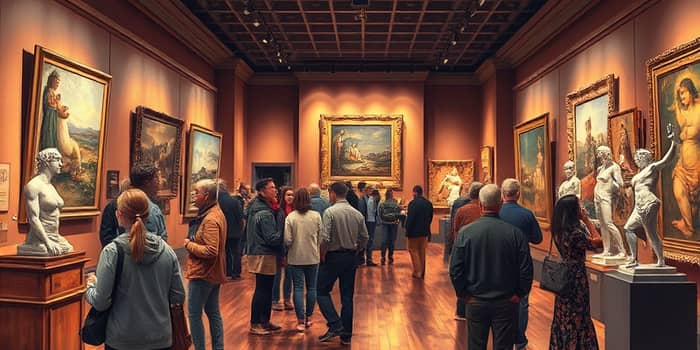
The world of art and collectibles is far more than a showcase of beauty—it is a vibrant, enduring asset class that blends emotion, history, and financial strategy. With the global art market now valued at global art market estimated at $1.7 trillion and projections pointing to more than $2.8 trillion by 2026, this sector commands attention from investors seeking both aesthetic pleasure and long-term wealth preservation. As financial portfolios evolve, so too does the recognition that a carefully curated art collection can serve as a powerful complement to traditional investments.
In this article, we explore the driving forces behind art investment, unpack performance data, and offer practical guidance for those poised to step into galleries, fairs, or private sales with both passion and prudence.
The scale of art as an asset class has grown remarkably in recent years. Ultra-high-net-worth individuals now hold more than $2 trillion in art and collectibles on their balance sheets, comprising roughly 11% of their overall portfolios. Meanwhile, younger collectors—particularly those in Gen Z—allocate upwards of 26% of their wealth to artworks, signaling a generational shift toward creative holdings.
Yet the market’s pulse can fluctuate. Global fine art sales reached approximately $57.5 billion in 2024—a 12% decline year-over-year—before staging an 11% rebound in early 2026, driven by trophy works and single-owner collections. This ebb and flow reflects broader economic forces: inflation, geopolitical unrest, and shifting buyer sentiment. Today’s investors must navigate a landscape where high-end lots may soften, even as mid-market and digital channels flourish.
Art and collectibles typically yield acts as an inflation hedge status, particularly in blue-chip segments. Over the long run, strategic seven-year and twenty-year horizons show nominal annual returns around 4.9%, adjusted for inflation. However, liquidity remains low, and price volatility outpaces that of real estate and traditional equity markets.
This comparison underscores that art can diversify a portfolio, reduce correlation risk, and offer unique cultural value, even as investors must grapple with holding periods that extend beyond standard investment cycles.
The post-pandemic era sees a buyer's market shaping emerging trends, defined by declining supply in secondary channels and rising private sales. As public auction volumes once led by major houses soften, collectors increasingly turn to bespoke deals, galleries, and digital platforms. Middle Eastern markets continue to expand, while Latin American artists command record prices at biennales and fairs.
Notably, younger and female collectors are leveraging securitization and blockchain verification to enter the market with confidence. Sub-$50,000 works now represent a growing share of volume, democratizing access to artistic investment. This shift from transactional purchasing to a private sales rise as dominant channel highlights the fusion of experience, technology, and curation in shaping modern collection practices.
Why do investors embrace art? Emotional resonance remains paramount, even as financial considerations grow. Wealth managers incorporating art into client portfolios rose from 53% in 2014 to 90% in 2023, reflecting institutional confidence in the sector’s diversification power.
For many, art signifies heritage and creative storytelling, transforming a simple asset into a narrative that can span generations. This holistic approach elevates collecting beyond pure speculation, imbuing each acquisition with cultural and personal significance.
As with any alternative investment, art carries unique challenges. High volatility and illiquidity mean that turning a piece into cash can take years. Costs for conservation, insurance, and secure storage can erode returns, while questions of provenance and authenticity carry reputational risks.
Despite these hurdles, the potential to offset inflation, hedge against market turbulence, and enrich personal legacy makes art an appealing complement to stocks and real estate.
Looking ahead, technological innovations—such as blockchain-based provenance tracking and digital viewing platforms—promise to reshape transactional efficiencies and broaden participation. Securitization models may unlock new capital pools, while private museums and foundations further restrict supply as artworks remain on long-term display.
The coming decade will likely emphasize mid-market growth, emerging artists from underrepresented regions, and experience-led acquisitions. For investors willing to blend **passion with process**, the art world offers a pathway to both creative fulfillment and financial resilience.
By approaching art investment with diligent research, expert counsel, and an appreciation for cultural depth, collectors can foster portfolios that stand out not only in performance but in story and substance. Embrace the canvas—your next masterpiece could be the defining asset in your legacy.
References