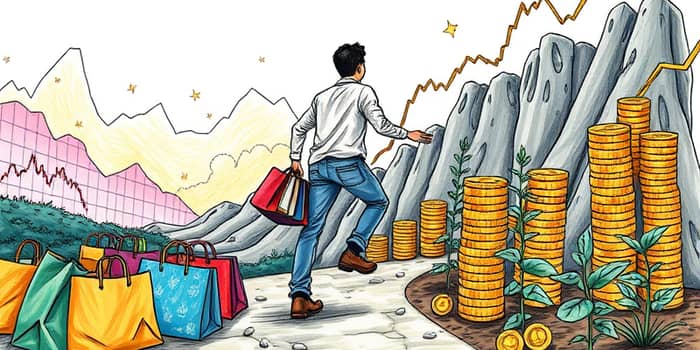
In today’s resilient yet uneven 2026 consumer landscape, many feel trapped by rising credit balances and an experiential spending culture. It’s time to escape the consumer spending trap and chart a new course toward wealth creation.
With consumer sentiment stuck at 57.3—20% below last year—and 25% of households living paycheck-to-paycheck, the need for an investor mindset has never been clearer. Shifting from passive spending to active investing empowers you to build lasting financial security.
U.S. consumer spending remains robust, driven by rising wages, inflationary boosts to nominal income, and a strong focus on experiences like concerts, sports events, and cruise vacations, which have grown double digits. Yet, this growth masks underlying stress signals: credit card balances are increasing, smaller households struggle to keep pace with rising costs, and consumer sentiment among non-investors lags significantly.
High-income households now account for over half of total consumer outlays, while a growing segment relies on revolving debt to fund their lifestyles. As the lines blur between enjoyment and overspending, the cycle of debt can feel inescapable—unless you pivot your habits toward investing.
The post-pandemic rebound has fueled a K-shaped recovery: affluent consumers prosper, while lower-income groups face headwinds. Despite a modest month-over-month gain in current conditions (+5.2%), the overall sentiment index remains stagnant, underscoring a fragile confidence.
Meanwhile, small businesses are integrating artificial intelligence at unprecedented rates—77% report adoption, and AI-related expenditures are up 10%, even as other budgets shrink. This diffusion of technology signals both a structural shift in the economy and fresh investment opportunities in tech themes.
Amid this environment, regulators such as the UK’s FCA and HM Treasury are promoting wider access to markets and simpler rules for retail investors, while cautioning against the lure of gamified trading platforms. Embracing DIY strategies means you can reclaim your financial power by saving on fees, maintaining control, and participating directly in market growth rather than funding endless consumption.
Investing also offers psychological benefits: redirecting funds from fleeting experiences into growing assets can foster a deeper sense of purpose and long-term security.
Starting your journey from consumer to investor requires clear, actionable steps. Consider the following path:
Taking the DIY route can be immensely rewarding. By managing your own portfolio, you can build wealth through disciplined investing while avoiding high advisory fees and embracing a transparent fee structure.
However, DIY investing also carries responsibilities. You must balance responsible risk-taking with protection by conducting diligent research and avoiding overly complex products.
Here’s how common investment approaches compare:
As interest rates begin to moderate, high-quality fixed income offers attractive yields compared to cash savings. Meanwhile, AI and technology diffusion remain powerful secular trends, despite potential capital-intensive challenges.
Consumer credit markets and real estate continue to present lower-risk borrowers with opportunities, supported by home equity growth. Broader themes—energy transition, AI-driven labor shifts, a multipolar geopolitical landscape, and robust consumer M&A—offer diverse entry points for investors seeking both growth and resilience.
With equities stretched but Fed rate cuts expected, cash becomes less compelling. A balanced, diversified portfolio—anchored by passive index exposure and complemented by targeted themes—can capture the upside of a resilient yet dispersed economic recovery.
Transitioning from consumer to investor is more than a financial tactic—it’s a mindset shift toward self-empowerment and long-term security. By starting small and automating your savings, you can start small and automate contributions to build momentum and confidence.
The journey toward wealth-building begins with a single decision: to pause the cycle of consumption and embrace the discipline of investing. Your future self will thank you for reclaiming control and forging your own path to prosperity.
References