Every individual’s relationship with money shapes their daily experience and future aspirations. In a world where 44% of adults struggle to make ends meet and over half cite money as their top stressor, embracing a holistic mindset is no longer optional—it’s essential. This guide offers a comprehensive roadmap to integrate spending, saving, and planning into a unified strategy that empowers you today and secures your tomorrow.
At its core, financial wellness is the state of being able to meet current obligations, handle emergencies, and pursue your goals without undue worry. The U.S. Consumer Financial Protection Bureau describes it as “the feeling of having financial security and financial freedom of choice,” both now and in the future.
It overlaps significantly with mental and physical health. When you can comfortably manage current bills and expenses, you reduce stress hormones, sleep better, and unlock more energy to enjoy life. True wellness means aligning your resources with what matters most.
A narrow focus on a single tactic—like frugal living—misses the interconnected nature of a flourishing financial life. Balancing day-to-day control with long-term goals creates a cycle of resilience. You gain confidence by paying bills on time, build agility through emergency reserves, and nurture ambition via investments. This integrated view lets you feel secure and free to choose when opportunities arise.
Moreover, recognizing how money stress impacts relationships, productivity, and health encourages comprehensive solutions. Addressing only debt without establishing savings may leave you vulnerable. Conversely, saving without a plan to reduce high-interest obligations can slow your growth. A holistic approach seamlessly weaves these pieces into a coherent tapestry.
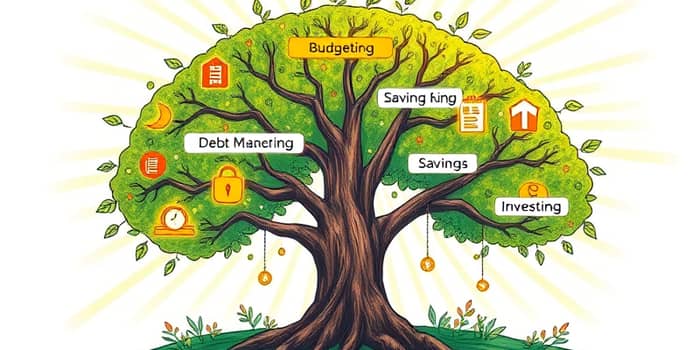
Experts consistently identify four foundational elements that support robust financial health. Each pillar contributes unique strength, and together they form an unshakable base.
Recent surveys reveal that nearly 19% of consumers measure financial wellness by their capacity to save for future goals. Yet only a fraction take systematic steps toward that target. Meanwhile, budgeting apps and mindful spending systems boast an 89% success rate in helping users align their outflows with personal values.
When money worries subside, people report better mental health, greater optimism, and an improved ability to withstand life’s shocks. In contrast, unmanaged stress can manifest physically, reducing immunity and increasing the risk of chronic illness. Investing in financial wellness is, in effect, investing in your overall well-being.
Implementing a holistic plan involves consistent, targeted action. The following strategies form a step-by-step framework you can adapt to your circumstances:
Obstacles—from unexpected medical bills to fluctuating income—can derail even the best-laid plans. The key is resilience. When you face setbacks, revisit your budget, lean on supportive communities, and remind yourself that progress is seldom linear.
Developing a mindset of continuous improvement transforms errors into feedback. By routinely reviewing your financial metrics and adjusting goals, you maintain momentum. This adaptive practice prevents minor hiccups from cascading into crises and keeps you aligned with evolving priorities.
Take Maya: she started with a simple spreadsheet to capture every purchase. Within three months, she reallocated 20% of her discretionary spending toward her emergency fund. When her car needed repairs, she navigated the expense without stress or credit penalties.
Then there’s James, who tackled a substantial student debt balance by refinancing loans and prioritizing the highest-interest accounts first. His disciplined approach and commitment to extra income streams shaved years off his repayment timeline, unlocking savings for homeownership sooner than he imagined.
Financial wellness is a dynamic journey, not a fixed destination. As your life evolves—through career advancements, family changes, or market shifts—your strategy should adapt accordingly. Regularly revisiting goals, rebalancing investments, and refining budgets ensures you stay on track.
By nurturing a mindset of learning and growth, each decision becomes an expression of your values, from resisting impulse purchases to recalibrating long-term targets. This practice empowers you to navigate uncertainty with confidence, transforming financial wellness from a distant ideal into a lived reality.
References