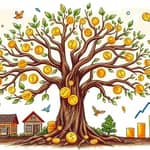
In a world marked by uncertainty and rapid change, establishing a solid economic base is more than a goal—it is a necessity. Every downturn, from global recessions to personal income shocks, tests our capacity to adapt, recover, and thrive. By embracing the principles of financial resilience, individuals, businesses, and communities can transform volatility into opportunity, protecting livelihoods and nurturing growth.
At its heart, economic resilience is the capacity to anticipate and recover from financial shocks while maintaining progress. This approach spans three dimensions: structural components such as savings and insurance; adaptive strategies like budgeting and innovation; and outcomes that include lasting financial stability and well-being. Each layer provides a vital piece of the foundation.
Economic resilience emerges when we combine robust resources with proactive behavior and supportive institutions. On the resource side, stable income streams, emergency reserves, manageable debt levels, and asset diversity serve as buffers against unexpected setbacks. Financial literacy and risk management empower individuals to make informed choices, while strong governance, well-regulated systems, and social safety nets offer systemic stability.
Whether at the national, regional, or household level, these elements weave together to form a resilient tapestry. A community with industry diversification and safety nets weathers unemployment surges more effectively. Likewise, a household with diverse income sources and financial buffers can navigate medical bills or sudden job loss without catastrophic consequences.
Building a resilient economic base rests on three core pillars, each reinforcing the others:
When these pillars stand firm, they create a framework where shocks may shake the surface but cannot undermine the roots. The interplay between individual action and systemic support is critical: empowered citizens demand better policies, and resilient institutions foster confident communities.
Personal financial resilience starts with clear, achievable goals and disciplined habits. Establish an emergency fund to cover essential expenses for several months. Improve financial literacy by engaging with trusted education programs or community workshops. Secure access to banking, credit, and insurance to shield against unexpected costs.
To illustrate a practical savings target, consider the table below, which recommends emergency fund sizes based on monthly expenses:
Beyond saving, diversify income by exploring side ventures, freelance work, or passive revenue streams. Maintain comprehensive health insurance to prevent medical emergencies from eroding your security. Finally, cultivate a network of family, friends, and community groups—together, you form a network of mutual support that strengthens everyone’s resilience.
Enterprises face complex and ever-evolving risks, from supply chain disruptions to market volatility. To build a robust business foundation, leaders must embrace flexibility and foresight. Develop contingency plans for critical operations, invest in diversified revenue channels, and maintain sufficient cash reserves to bridge lean periods.
Leadership transparency and stakeholder engagement build trust, ensuring that employees, customers, and partners remain confident during transitions. Ultimately, a resilient organization is one that anticipates change rather than merely reacting to it.
Government and civic institutions serve as the bedrock of large-scale economic resilience. By crafting strong governance and regulatory frameworks, policymakers can mitigate systemic risks and promote stability. Expanding social safety nets—such as unemployment benefits, childcare support, and healthcare access—shields vulnerable populations from devastating shocks.
Regional diversification initiatives encourage investment across multiple industries, reducing dependence on single sectors. Financial literacy programs targeted at at-risk communities enhance individual capacity, while public-private partnerships strengthen infrastructure and innovation. Together, these measures cultivate an environment where businesses and families can flourish.
Quantitative metrics guide strategic decisions. Key indicators include GDP growth rates, employment statistics, income distribution measures, and vulnerability indices. Emerging approaches like the Gross Resilient Product (GRP) adjust economic performance for projected climate impacts, offering a forward-looking lens on sustainability.
Regularly assessing these metrics helps governments, businesses, and households identify weaknesses, allocate resources effectively, and celebrate milestones. A transparent, data-driven process fosters accountability and continuous enhancement of resilience strategies.
Building a resilient economic base is both a technical endeavor and a deeply human journey. It requires discipline, creativity, and solidarity. By viewing challenges as catalysts for innovation, we unlock new pathways to prosperity.
Start today: examine your current financial practices, connect with support networks, and advocate for policies that strengthen communal stability. Each step, no matter how small, contributes to a collective tapestry of strength, hope, and lasting growth.
Through intentional action and shared commitment, we can transform uncertainty into opportunity, forging a future where individuals, businesses, and societies thrive in harmony under any circumstances.
References