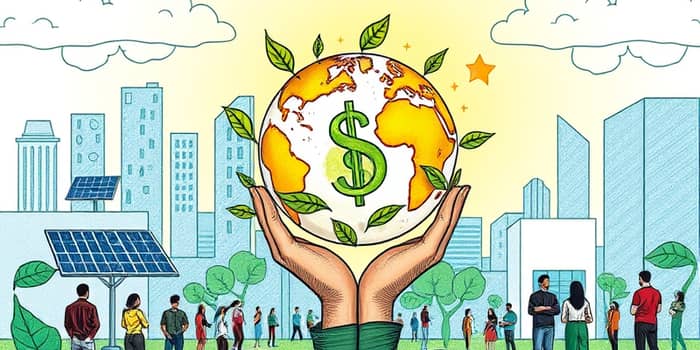
Imagine a world where every dollar you invest not only grows but also fuels positive change. This is the essence of ethical investing.
It's about making your money work for you and the planet.
By aligning investments with personal values, you can drive impact beyond returns.
In today's complex financial landscape, this approach offers a refreshing path to meaning and prosperity.
Ethical investing goes beyond traditional finance by prioritizing moral and social principles.
It involves selecting investments that reflect your beliefs, such as environmental sustainability or human rights.
Ethical values are the primary objective, alongside financial gains, creating a dual focus on profit and purpose.
This strategy empowers you to support companies that share your vision for a better world.
Driven by global challenges, ethical investing has surged in popularity.
Increasing concerns about climate change and social justice push investors toward responsible options.
More people now demand that corporations act ethically, from fair labor practices to green initiatives.
This shift makes ethical investing not just a trend, but a necessity for modern portfolios.
Understanding the terminology helps navigate this field with confidence.
Various terms describe similar approaches, all centered on values-based decisions.
Each term emphasizes different aspects, but the core idea remains consistent: investing with conscience.
Different methods allow you to tailor your strategy to specific values.
Here are the main approaches, each with unique focuses.
Choosing an approach depends on your personal ethics and goals.
Practical strategies make ethical investing accessible and effective.
These methods help filter investments to match your values.
Active selection of ethical stocks ensures alignment with your principles.
Creating a portfolio starts with clear goals and diversified assets.
Begin by drafting an Ethical Investment Policy Statement to outline your values.
Consider these key steps for a balanced approach.
Available investment options include individual stocks, ETFs, and ethical mutual funds.
Regular monitoring ensures your portfolio stays aligned with evolving values.
Ethical investing isn't without hurdles, but awareness helps navigate them.
Key challenges include transparency issues and performance trade-offs.
Greenwashing and transparency issues demand careful scrutiny from investors.
However, studies show that ethical investments can achieve competitive returns over time.
Ethical investing is deeply individual, with no one-size-fits-all solution.
No universal standards exist, making it a custom journey for each investor.
What you deem ethical might differ from others, based on personal morals.
This flexibility allows for creativity but requires self-reflection and clear criteria.
The rewards of ethical investing extend far beyond your bank account.
It fosters positive change while providing personal satisfaction.
Generating competitive financial returns that align with investors' values is a key goal.
Many find the social benefits worth any potential financial trade-offs.
Embarking on this journey is easier than you might think.
Start by clarifying your core values and financial objectives.
Research investment options that match your ethics, using tools like ESG ratings.
Consult with financial advisors who specialize in sustainable finance.
Begin small, perhaps with an ethical ETF, and expand as you learn.
Regularly review your portfolio to ensure it reflects your evolving values.
Remember, every investment is a vote for the world you want to see.
By aligning your money with your values, you become part of a global movement for good.
References