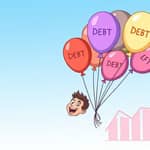
Debt can feel like an insurmountable mountain, casting a shadow over your dreams and daily life.
But with the right approach, it becomes a puzzle you can solve piece by piece.
This guide is designed to empower you with actionable and step-by-step strategies that transform overwhelm into control.
Whether you're dealing with credit cards, loans, or other obligations, the path to freedom starts here.
Embrace this journey as a chance to rebuild your financial foundation and secure a stable future.
Before tackling debt, you must fully understand its scope and impact on your finances.
Begin by conducting a comprehensive debt audit early in the year to gain clarity.
List every debt with details like balances, interest rates, minimum payments, and due dates.
Pull your free credit reports to ensure accuracy and identify any hidden issues.
This audit reveals which debts are most costly and helps you prioritize effectively.
Common pitfalls include making only minimum payments, which lead to spiraling interest and fees.
Debt often feels like scattered obligations pulling your finances in different directions.
To counter this, review your income versus expenses meticulously.
For retirees on fixed incomes, cutting unnecessary costs is essential for cash flow.
Consider downsizing housing or adding roommates to free up funds for debt repayment.
Use technology to streamline this process and stay organized.
Here are key steps to kickstart your debt audit:
Remember, debt elimination is a marathon, not a sprint, requiring consistency over speed.
Focus on protecting your credit score and reducing stress through steady progress.
With a clear audit, choose a repayment strategy that aligns with your personality and goals.
The two primary methods are the debt snowball and debt avalanche approaches.
Both demand strict budgeting to free up extra funds for accelerated payments.
The debt snowball method involves paying minimums on all debts while directing extra money to the smallest balance first.
Once that debt is cleared, you roll the payment to the next smallest balance.
This builds momentum through quick wins, which can boost motivation significantly.
It's ideal for those who need psychological encouragement to stay on track.
In contrast, the debt avalanche method focuses on paying off the debt with the highest interest rate first.
This saves more money in the long run by minimizing interest accumulation.
However, it may offer slower initial progress, which can be discouraging for some.
Choose based on what drives you: snowball for behavioral motivation, avalanche for math efficiency.
Here's a comparison table to guide your decision:
Both strategies require prioritizing debt repayment as a non-negotiable need in your budget.
In 2026, with potentially high interest rates, align your strategy with the economic environment.
Consider negotiating lower rates by demonstrating a consistent repayment history.
To implement effectively, follow these steps for either strategy:
If managing multiple debts becomes overwhelming, consolidation can simplify your financial life.
Debt consolidation combines various debts into a single payment with a lower interest rate.
Options include personal loans, home equity loans, or balance transfers to 0% APR cards.
This simplifies tracking and allows more of your payment to go towards the principal balance.
Debt Management Plans (DMPs), offered by nonprofit agencies, roll debts into one reduced-rate payment.
These plans typically lead to payoff in 3-5 years with small startup or monthly fees.
They are excellent for improving cash flow and avoiding the hassle of juggling due dates.
However, it's crucial to avoid taking on new debt while in a consolidation plan.
Negotiate rates first and commit to not adding more charges to your accounts.
For larger debt loads, consider restructuring options like refinancing for more flexibility.
Here are common consolidation tools to explore:
These tools can transform chaotic finances into a manageable, streamlined process.
For those with significant debt, advanced options like debt settlement or credit counseling may be necessary.
Debt settlement has a 55% success rate overall, but results vary by creditor and debt type.
Statistics show that 74% of accounts settle at least one debt in 36 months.
Only 23% settle all accounts fully, highlighting the importance of realistic expectations.
Credit counseling involves negotiating lower rates and payments with creditors directly.
Early intervention, such as seeking help within 30 days of delinquency, boosts completion rates.
Banks often see higher recovery with targeted agencies and early referrals from consumers.
Debt Management Plans (DMPs) focus on consistency with low fees and structured payments.
For retirees, these plans can free up cash before attempting to increase income.
Track early payoff rates for motivation, as proactive borrowers tend to succeed faster.
Bankruptcy should be considered only as a last resort for families in extreme hardship.
Be aware of the risks associated with these options:
Use data-driven insights to choose the best path for your situation.
The foundation of lasting debt freedom lies in a solid budget and healthy financial habits.
Adopt the 50/30/20 budget rule for effective allocation: 50% for needs, 30% for wants, 20% for savings and debt payoff.
Automate payments to ensure you never miss a due date and to build consistency.
Develop habits that support your goals, such as always paying more than the minimum.
Cut non-essentials and use apps to track expenses and progress in real-time.
Set realistic timelines for debt payoff, acknowledging that debt took time to accumulate.
In 2026, use the new year as a reset to audit finances, strategize, and build an emergency fund.
Prioritize high-interest debts and seek ways to increase payments through expense cuts or side income.
With inflation and high rates, targeted strategies like early credit counseling are effective.
The endgame is achieving financial peace through control, not reaction to crises.
Here are essential habits to cultivate for long-term success:
Debt management brings order to your finances, turning scattered obligations into structured repayment.
By following this practical path, you can decode your debt and step into a future of freedom and stability.
Embrace the journey with patience and determination, knowing that every step brings you closer to financial peace.
References